I choose an expert puzzle for the kind of problem I want
I do not see every expert board as the same challenge. One asks me to follow architecture, another to separate a gradient, and another to decode a repeated pattern. I choose the image according to the visual skill I want to practise.
The live game currently generates a 12 by 12 board for puzzles labelled Expert. That means 144 playable tiles, matching the count shown on each Expert puzzle page and card.
Persian Carpet: I search for symmetry
Persian Carpet is my pattern challenge. Many fragments contain similar colours and motifs, so object recognition is less useful than structure.
I begin with any border-like bands and the central motif. I compare the direction of curves and the spacing between repeated shapes. If the design is symmetrical, I use that symmetry as a map, while remembering that mirrored regions can make two pieces look deceptively similar.
I avoid building one huge pile of "red patterned pieces." I split it into border, centre, curved motifs, and background fill.
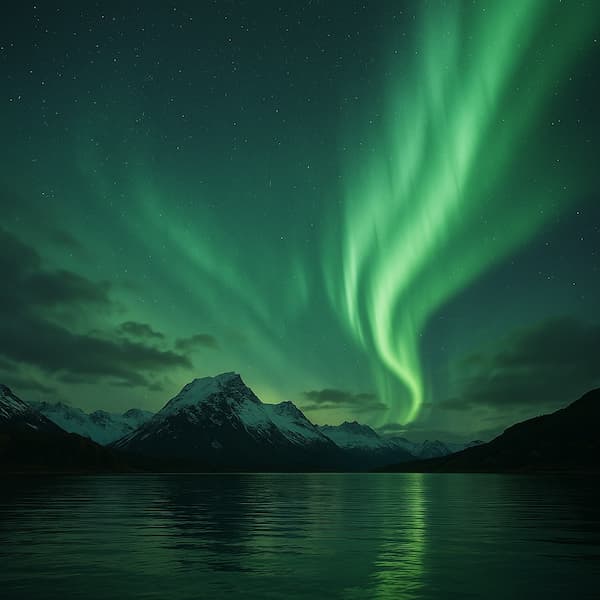
Northern Lights: I read small gradient changes
Northern Lights combines a dark landscape with sweeping colour in the sky. Large low-detail regions can make location uncertain.
I first separate the silhouette and horizon from the sky. Within the sky, I compare the direction of each light band and whether the colour shifts toward green, blue, or violet. I place high-contrast transitions before the darkest fragments.
For near-black pieces, I increase screen brightness only enough to distinguish detail without washing out the image. If a fragment has no useful landmark, I leave it until neighbouring positions reduce the choices.
Times Square: I use text and straight lines
Times Square is dense, but density also creates clues. Signs, lettering, window grids, and building edges give me fragments that are locally distinctive.
I group pieces by sign colour and look for straight continuations. A partial letter can be more valuable than a large patch of neon. After assembling a sign, I use the surrounding dark structure to connect it to the larger board.
My main risk is sorting by brightness alone. Many unrelated signs share similar whites and yellows, so I include line direction and typography in every comparison.
Sunflower Field: I separate scale and depth
Sunflower Field repeats yellow petals, brown centres, stems, and leaves. I look at scale: flowers nearer the camera should occupy more of a tile, while distant flowers create smaller, denser marks.
I also separate sky and horizon early. That boundary establishes orientation before I tackle the repeated field. Within the flowers, I compare the angle of stems and the amount of green background rather than looking only for yellow.
New York City: I build architectural blocks
New York City contains packed towers, windows, streets, and shadows. I treat each recognisable building as a sub-puzzle.
Vertical edges help me orient fragments, but many buildings have similar grids. I therefore group by facade colour, window spacing, and light direction. I complete the most distinctive rooflines first and use them to position less distinctive wall sections.
Cute Cat: I follow fur direction
Cute Cat looks approachable as a subject, but fine fur and background detail can make it demanding. I start with the eyes, nose, ears, and whiskers because they have strong shapes.
For fur-only pieces, I compare strand direction, colour temperature, and the transition between face and background. "Brown fur" is too broad a category; cheek fur, ear fur, and body fur flow differently.
Fruit Basket: I identify surface texture
Fruit Basket is crowded with curved forms, highlights, leaves, and overlapping colours. I identify individual fruit types through skin texture and highlight shape. A glossy apple, porous citrus peel, and soft grape cluster create different visual signals even when colours overlap.
I build the basket edge and the most distinctive fruit first. Overlaps then tell me which object sits in front of another, turning clutter into depth information.
Canyon: I trace geological layers
Canyon replaces manufactured straight lines with rock strata, ridges, sunlit faces, and shadow. I follow continuous geological bands and separate warm illuminated rock from cooler shaded walls.
I resist grouping every orange-brown fragment together. The angle of a ridge and the boundary between light and shadow usually provide a better location clue than colour alone.
My common expert strategy
Across these puzzles, I use the same sequence: find a few unique anchors, divide the image into meaningful regions, subdivide repeated regions by direction or scale, and postpone truly ambiguous pieces until the open positions constrain them.
I use the reference image throughout. Expert difficulty should reward closer observation, not require me to forget what the finished picture looks like.