Food puzzles are exercises in separating similar objects
A food photograph often contains many rounded shapes, warm colours, repeated highlights, and overlapping ingredients. A fruit basket can place several red or green objects side by side. A plated dessert can repeat cream, chocolate, crumbs, and shadows across a small area. The finished image is familiar, but its fragments can be surprisingly ambiguous.
I begin by identifying containers and surfaces. Plates, bowls, cups, baskets, trays, and table edges provide geometry that loose ingredients do not. A curved plate rim can connect several fragments and establish the scale of everything inside it.
After that, I look for the strongest individual ingredient or decoration. A berry, mint leaf, coffee pattern, or bright garnish can become a local anchor.
I build the table setting before the food interior
The boundary between a dish and the table is usually clearer than the texture inside the dish. I collect plate rims, bowl edges, handles, napkins, utensils, and strong shadows.
In Tiramisu, the dessert may contain several similar cream and cocoa regions. The plate boundary and the outer edges of the slice help define its position. I assemble those geometric transitions before sorting the softer interior layers.
Chocolate Brownie contains a narrow range of brown tones. I search for straight cut edges, plate contrast, crumbs against a different surface, and highlights that reveal the dessert’s shape. A dark brown fragment beside a pale plate carries more information than an uninterrupted patch of cake.
For Latte Art, the cup rim is an ideal circle-like guide. I follow the changing curve and distinguish the white ceramic from foam. Once the rim and handle are placed, the decorative pattern has a fixed centre.
Containers create a coordinate system. They tell me what is inside, outside, above, and below even before every ingredient is recognizable.
I read highlights to understand rounded forms
Fruit, glazed food, cups, and polished utensils reflect light. A highlight is not merely a white patch; its direction helps describe the surface.
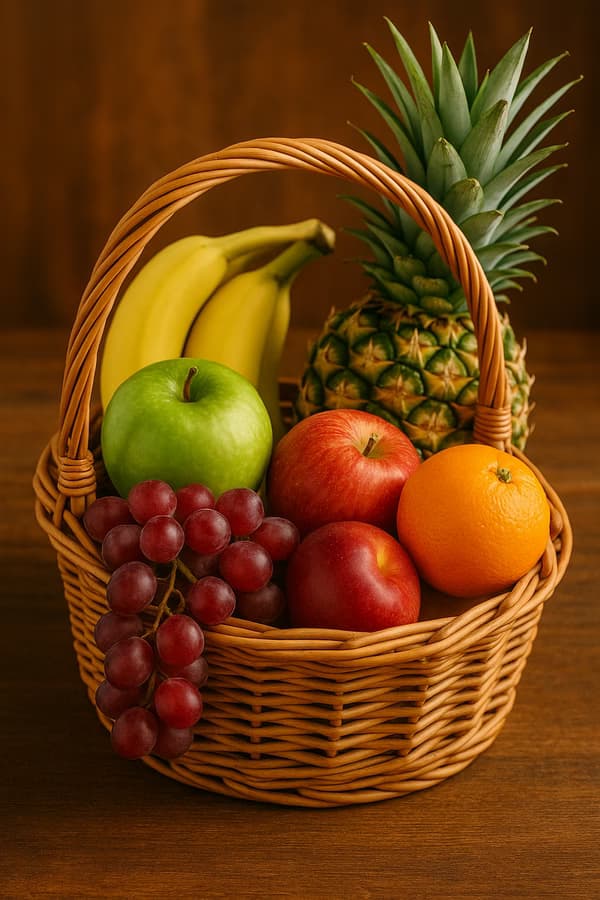
In Fruit Basket, several fruits may share colour and shape. I compare highlight size, skin texture, stem placement, and the neighbouring object. A red fruit beside a yellow one belongs to a different overlap than red beside leaves or basket weave.
Rounded objects usually transition from highlight to midtone to shadow. I arrange fragments according to that progression. If the light source is consistent across the photograph, highlights on different objects tend to face the same general direction, but their shapes still depend on each surface.
I am cautious with white highlights because they can also belong to plate glare, cream, napkins, or empty background. The edge around the light area tells me which material produced it.
For liquids, reflections often follow the cup or bowl. Coffee foam has a soft organic boundary, while ceramic produces a cleaner line. That difference prevents me from mixing the drink with its container.
I sort repeated ingredients by context
A pile labelled "berries" or "leaves" is only a starting point. Repeated ingredients become placeable when I include their neighbours.
I ask whether a leaf touches fruit, plate, table, or another leaf. I check whether a berry is whole, cut, partly hidden, or seen near the edge of the composition. Overlap determines depth: an unbroken contour normally belongs to the object in front, while an interrupted contour continues behind something else.
In Korean Dishes, multiple bowls and ingredients can produce many small regions of colour. I first distinguish bowls by rim, interior colour, and position. Then I assign ingredients to a container instead of treating every green or red fragment as part of one global group.
Chopsticks, spoons, and table lines can cross several dishes. These long straight features are useful because their direction continues through otherwise unrelated food textures.
When similar ingredients occupy different bowls, the bowl colour visible at a fragment’s edge is the decisive clue.
I separate warm colours by material
Food images frequently concentrate reds, oranges, yellows, and browns. Sorting only by hue creates large mixed piles. I classify the material producing the colour.
Bread and cake show pores, crumbs, and cut surfaces. Fruit skin is smoother and may contain a tight highlight. Sauce can be glossy with irregular reflections. Wood grain forms directional lines. Basket weave repeats interlocking bands. A toasted surface has mottled colour rather than a single flat tone.
For a brownie, I distinguish the crust, interior crumb, topping, plate shadow, and wooden or fabric background even if all appear brown. For tiramisu, I separate cocoa powder, cream layers, cake layers, and cast shadow.
Texture scale matters too. Tiny crumbs differ from broad wood grain. A close fruit surface may show small speckles, while the background loses detail.
My labels become combinations such as "dark glossy sauce," "pale porous cake," or "warm diagonal wood grain." Those descriptions retain far more location evidence than "brown."
I use circles and curves carefully
Plates, cups, bowls, fruit, and pastries create many curves. Curves are helpful, but two arcs from different objects may appear compatible.
I compare radius, edge thickness, inside colour, and outside colour. A large plate rim changes direction gradually, while a small cup rim curves more quickly. A bowl may show an inner and outer line. A fruit edge usually lacks the regular manufactured thickness of ceramic.
The square game grid means a smooth circle becomes a sequence of small directional fragments. I place the most recognizable top, bottom, left, and right curve regions first, then fill the diagonal transitions.
In Latte Art, the cup rim surrounds a single central pattern. In a multi-dish scene, several separate rims compete for attention. I keep each candidate cluster small until its colour and curve prove which container it belongs to.
I finish crumbs and shadows last
Crumbs, soft shadows, plain table areas, and repeated background fabric contain less information. I do not spend early time testing them across many positions.
Instead, I complete the plates, food outlines, highlights, utensils, and major overlaps. The remaining negative spaces then define the shape of the low-detail background.
Shadows can still provide direction. A cast shadow should extend away from the light source and follow the object creating it. Near the end, I compare shadow softness and the background material beneath it.
Crumbs are useful when they form a distinctive trail or sit close to a known edge. Isolated crumbs in a uniform surface are late-stage clues.
My food-puzzle checklist
Before solving, I identify:
- Every plate, bowl, cup, basket, tray, and utensil.
- The dominant light direction and strongest highlights.
- Distinct ingredients and the objects they overlap.
- Materials that share colours but have different textures.
- Curves with different radii and edge thickness.
- Low-information crumbs, shadows, or table regions to delay.
Food puzzles become easier when I think like a still-life observer rather than naming ingredients. The useful question is not only "What food is this?" It is "What surface, boundary, light, and neighbouring object does this fragment contain?" That evidence turns repeated appetizing shapes into a structured solve.